Seasonal Shifts in Digital Platform Reward Gatherings Across User Demographics
Katja Hughes · Jun 21, 2026
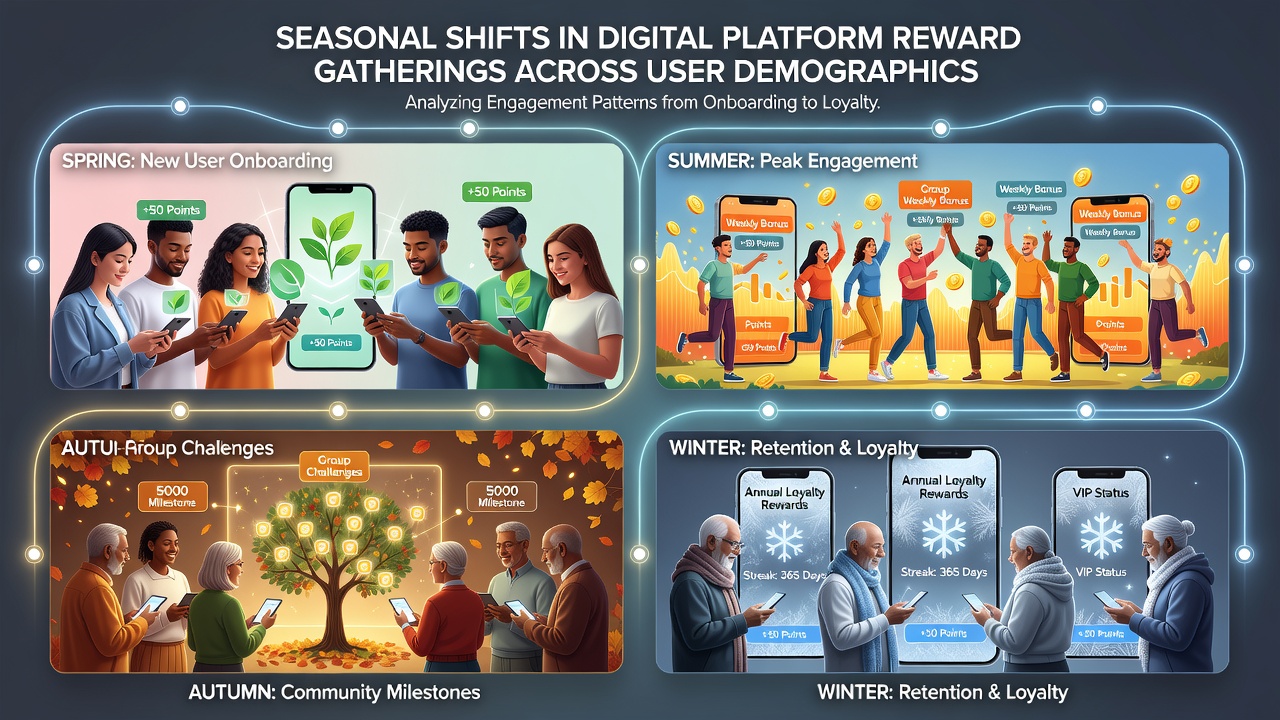
Seasonal Shifts in Digital Platform Reward Gatherings Across User Demographics
Digital platforms track reward collections through points systems, badges, and tiered incentives that users accumulate across apps and services, and these patterns change with seasons while differing by demographic groups according to industry reports. Researchers at various academic institutions have documented how participation rates fluctuate during holiday periods versus summer months, with data indicating younger users often accelerate collections during back-to-school promotions whereas older demographics maintain steadier engagement throughout the year.
Understanding Core Patterns in Reward Accumulation
Studies from organizations like the Pew Research Center reveal that reward gathering on e-commerce and lifestyle applications intensifies around specific calendar events, and users in urban areas tend to respond more quickly to seasonal campaigns compared to rural counterparts. Data collected across multiple platforms shows that collection volumes for fitness and wellness apps rise notably in January and June, periods when many individuals set new goals, while entertainment streaming services see spikes in reward redemptions during winter months when indoor activities increase.
Geographic variations also play a role, as evidenced by reports from the Australian Bureau of Statistics which track digital engagement trends across states and territories. These findings indicate that coastal populations collect rewards at higher rates during summer vacation seasons, whereas inland groups maintain consistent activity tied to work-related incentives.
Demographic Variations Across Age and Gender Lines
Age groups demonstrate distinct behaviors in how they approach digital rewards, with data from university-led surveys highlighting that individuals aged 18 to 34 prioritize time-limited challenges and social sharing features during spring and fall transitions. In contrast, users over 55 often focus on loyalty milestones that align with routine purchases, showing less fluctuation tied to holidays.
Gender-based differences emerge in several analyses, where reports note women frequently engage with reward programs in beauty and household categories during pre-holiday periods, while men show stronger participation in tech and automotive app incentives around product launch seasons. Observers note these trends hold across platforms in North America and Europe, based on aggregated user data from 2025 into 2026.
June 2026 Trends and Regional Influences
During June 2026, platform analytics indicated a surge in reward collections within outdoor and travel categories as summer activities gained momentum, and this period aligned with increased mobile app usage in warmer climates. Canadian government statistical releases documented similar upticks in western provinces, where users leveraged seasonal promotions for outdoor gear and recreation services.
European data from research institutions further illustrated how Mediterranean countries experienced earlier shifts toward summer reward themes compared to northern regions, reflecting climate-driven behavioral adjustments. These patterns underscore how external factors like weather and school schedules intersect with platform design to shape collection habits.
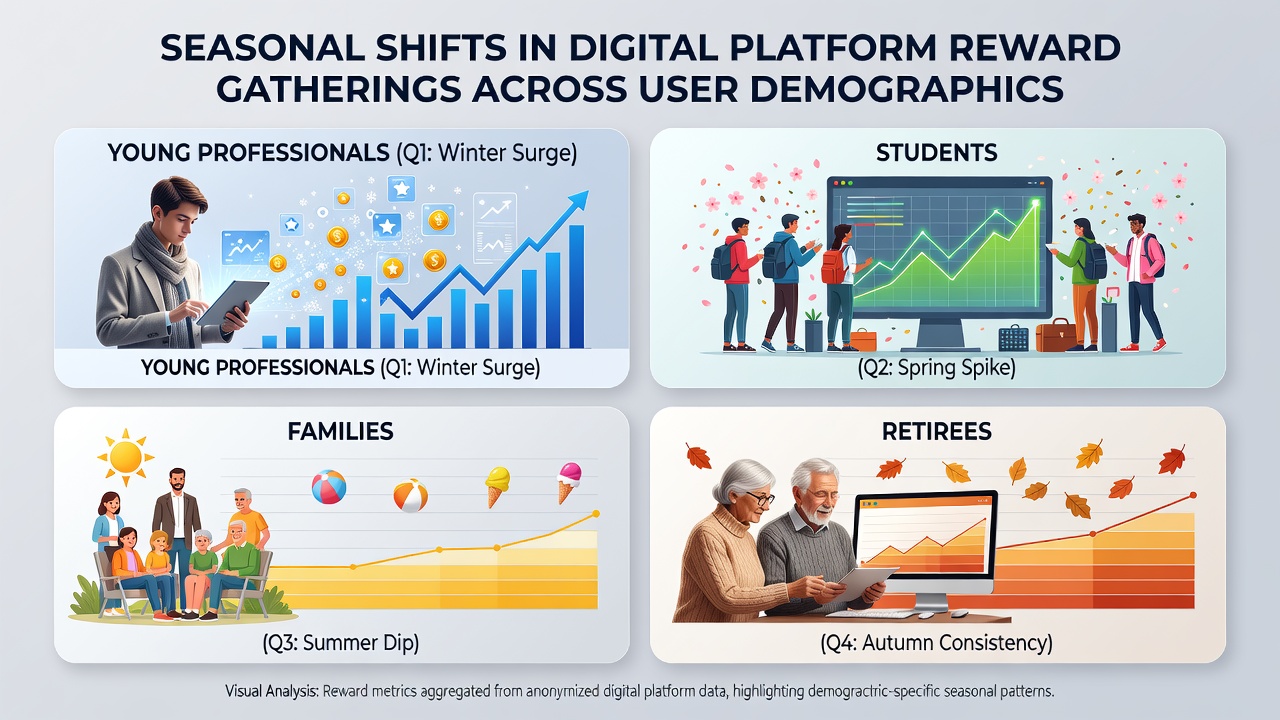
Income Levels and Platform Engagement Shifts
Income demographics influence reward pathways as well, with lower to middle income groups showing heightened activity during discount-heavy seasons such as post-holiday sales, according to aggregated figures from trade associations in the Asia-Pacific region. Higher income users meanwhile demonstrate steadier engagement with premium tier rewards that emphasize exclusivity rather than volume-based collections.
Platform operators adjust incentive structures accordingly, and data indicates these adaptations lead to varied redemption rates that follow predictable seasonal curves across socioeconomic segments. Researchers continue to monitor these dynamics through longitudinal studies that span multiple years and geographic markets.
Conclusion
Seasonal shifts in digital platform reward gatherings reflect complex interactions between user demographics, calendar events, and regional conditions, with evidence from diverse sources confirming consistent patterns over time. Continued analysis by academic and governmental bodies will likely refine understanding of these trends as platforms evolve their offerings through 2026 and beyond.