How Age Demographics Shape Mobile Live Dealer Incentive Usage in Digital Currency Casinos
Rafael Schmidt · Jul 19, 2026
How Age Demographics Shape Mobile Live Dealer Incentive Usage in Digital Currency Casinos
Digital currency casinos have seen mobile live dealer games become a central offering, and age demographics play a measurable role in how players interact with the incentives attached to those sessions. Recent platform data compiled through July 2026 indicates that usage patterns diverge sharply across generational cohorts, with differences appearing in redemption frequency, preferred incentive types, and session behaviors on portable devices.
Generational Differences in Mobile Access and Incentive Selection
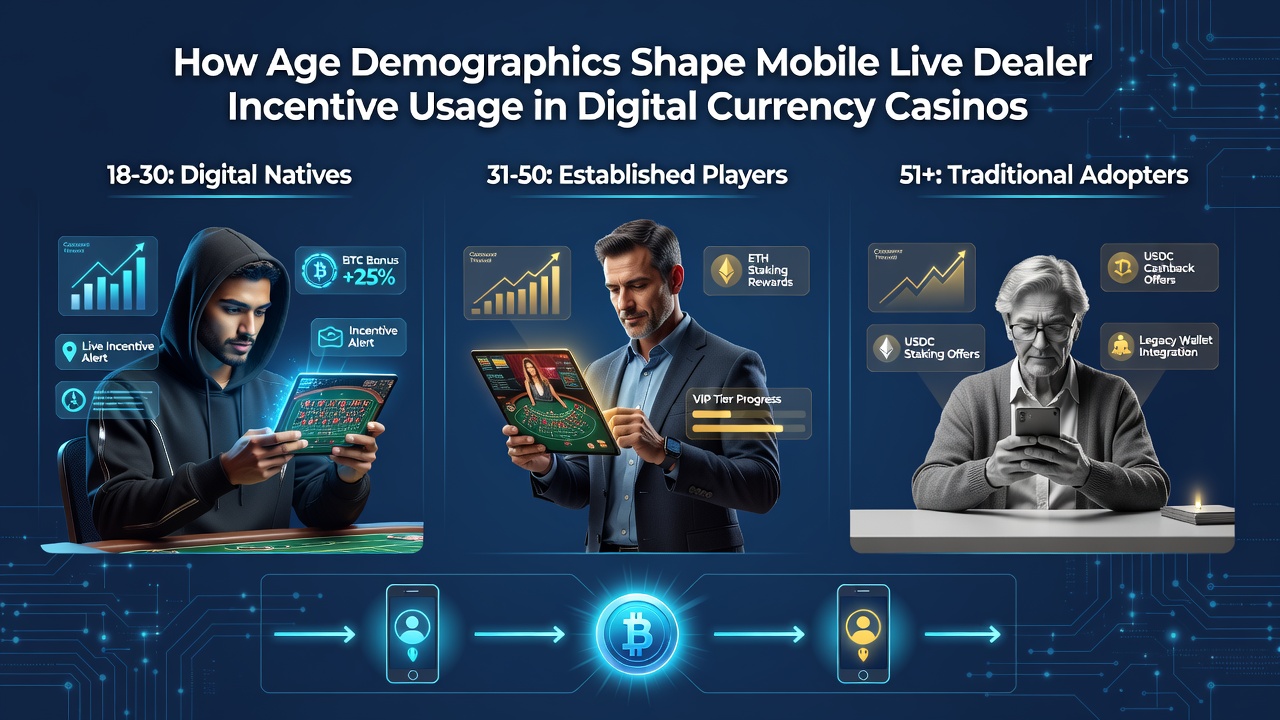
Younger players, particularly those aged 18 to 34, tend to favor instant, mobile-native incentives such as no-deposit spins or time-limited bonus rounds that activate directly within live dealer apps. These users often complete verification steps through blockchain wallets in a single session, which allows them to claim rewards without leaving the mobile interface. In contrast, individuals between 35 and 54 show higher engagement with matched deposit offers that accumulate across multiple live table sessions, while players over 55 demonstrate lower overall redemption rates yet longer average session durations once an incentive is active.
Platform analytics from several major operators reveal that Gen Z and millennial cohorts account for the majority of mobile live dealer traffic in July 2026, with their incentive usage concentrated on short, high-frequency rewards. Older groups participate less frequently on mobile but convert a higher percentage of accumulated loyalty points into live dealer seat reservations when they do engage.
Device Preferences and Verification Pathways
Smartphone penetration rates influence how each age group encounters and activates incentives. Data collected across blockchain-enabled platforms shows that users under 35 complete mobile verification sequences at rates exceeding 70 percent within the first hour of account creation, whereas those aged 45 and above often require additional steps or desktop fallback options before accessing the same live dealer bonuses. This variation affects the speed at which incentives become available during live sessions.
Researchers tracking reward accumulation have noted that younger cohorts frequently combine multiple micro-incentives, such as progressive free spins layered with cashback percentages, within a single evening of mobile play. Middle-aged users more commonly select structured deposit-match programs that extend across several days, and older players exhibit steadier patterns of smaller, recurring loyalty rewards tied to consistent live table participation.
Regional Patterns and Regulatory Influences
Geographic factors intersect with age demographics in shaping incentive uptake. In jurisdictions with established digital currency frameworks, such as certain Canadian provinces, younger players demonstrate higher volumes of cross-border mobile redemptions compared with older participants who remain within domestic platform limits. Ontario iGaming reports document these age-based differences in live dealer activity during the first half of 2026.
European operators have observed similar trends, where players aged 25 to 40 show elevated use of crypto-specific incentives that bypass traditional banking delays. Meanwhile, participants over 50 maintain steadier engagement through established loyalty tiers that reward extended live dealer time rather than rapid reward cycling.
Incentive Types and Retention Across Age Groups
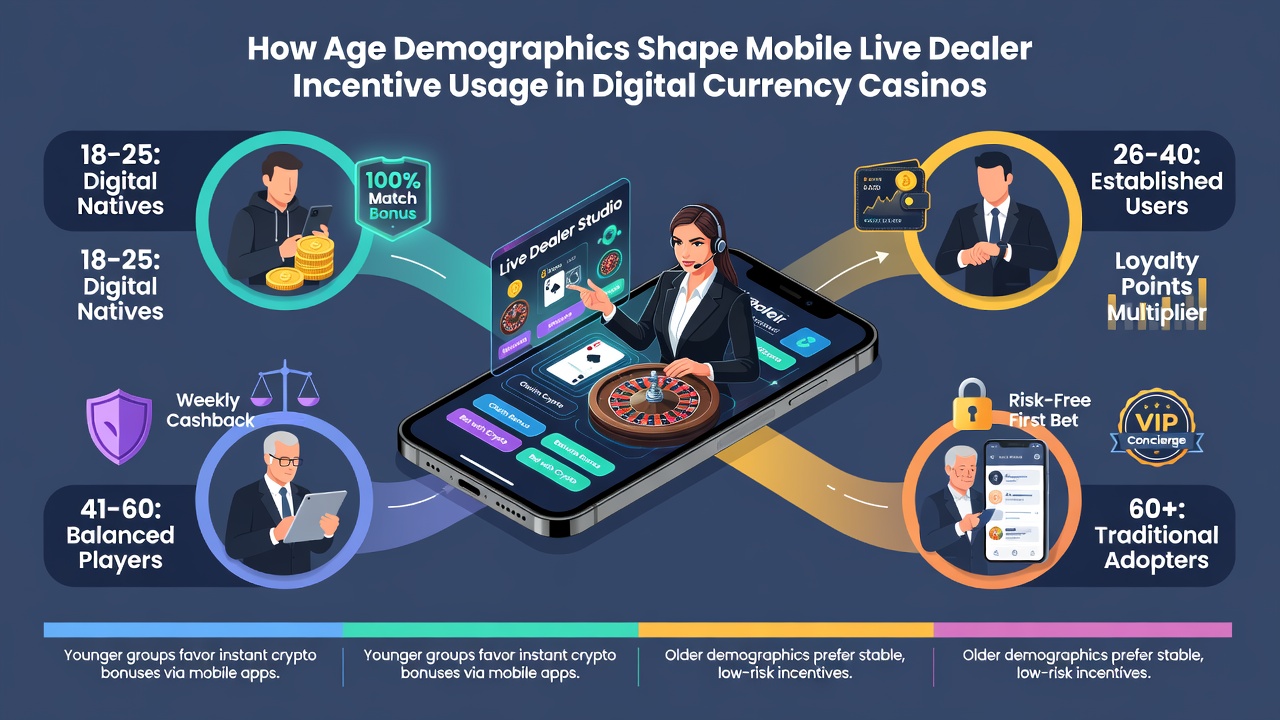
Live dealer incentives in crypto environments include deposit matches, cashback on table losses, and targeted free spin packages. July 2026 figures indicate that players aged 18–29 redeem spin-based offers at nearly twice the rate of those aged 50 and above, while the older cohort shows stronger uptake of cashback programs that offset extended play sessions. These patterns hold across multiple operators regardless of specific game selection.
Studies from academic institutions examining blockchain gaming behavior confirm that device type correlates with incentive preference by age. Mobile-first users in younger brackets respond more readily to time-sensitive promotions, whereas desktop or tablet users in older brackets favor incentives that accumulate steadily without requiring constant app interaction.
Behavioral Metrics and Platform Adjustments
Session length data reveals that younger mobile players average shorter but more frequent live dealer visits, often triggered by teh availability of a new incentive. Older participants log fewer sessions yet sustain longer continuous play once logged in, which influences how operators structure age-segmented reward pathways. Platform adjustments implemented in early 2026 have included tailored push notifications and wallet integration prompts calibrated to these observed differences.
Industry organizations monitoring digital currency adoption have tracked how these demographic patterns affect overall incentive distribution. Reports from groups such as the European Gaming and Betting Association highlight that age-specific mobile usage continues to drive product development decisions around live dealer features.
Conclusion
Age demographics continue to influence mobile live dealer incentive usage in digital currency casinos through distinct patterns of access, selection, and retention. Younger cohorts drive volume in instant reward categories, while older groups contribute to sustained engagement via loyalty mechanisms. As operators refine their offerings through July 2026 and beyond, these measurable differences remain central to how incentives are designed and distributed across portable platforms.