Dissecting Timing Windows That Shape Reward Claim Success in Networked Entertainment Systems
Sam Günther · Jul 28, 2026
Dissecting Timing Windows That Shape Reward Claim Success in Networked Entertainment Systems
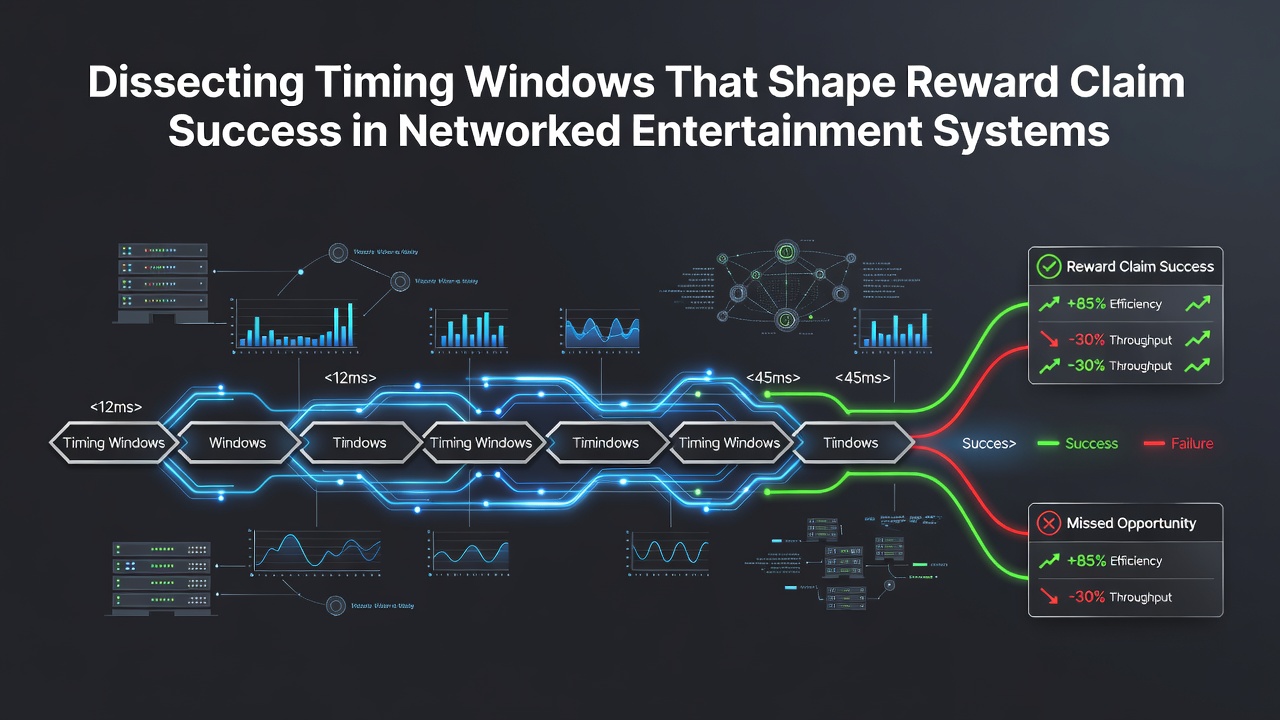
Timing windows in networked entertainment systems represent precise intervals during which users can successfully claim rewards before system states shift or opportunities expire, and these intervals depend on server synchronization protocols, user connection stability, and platform verification layers that operate continuously across global networks.
Core Mechanics of Timing Windows
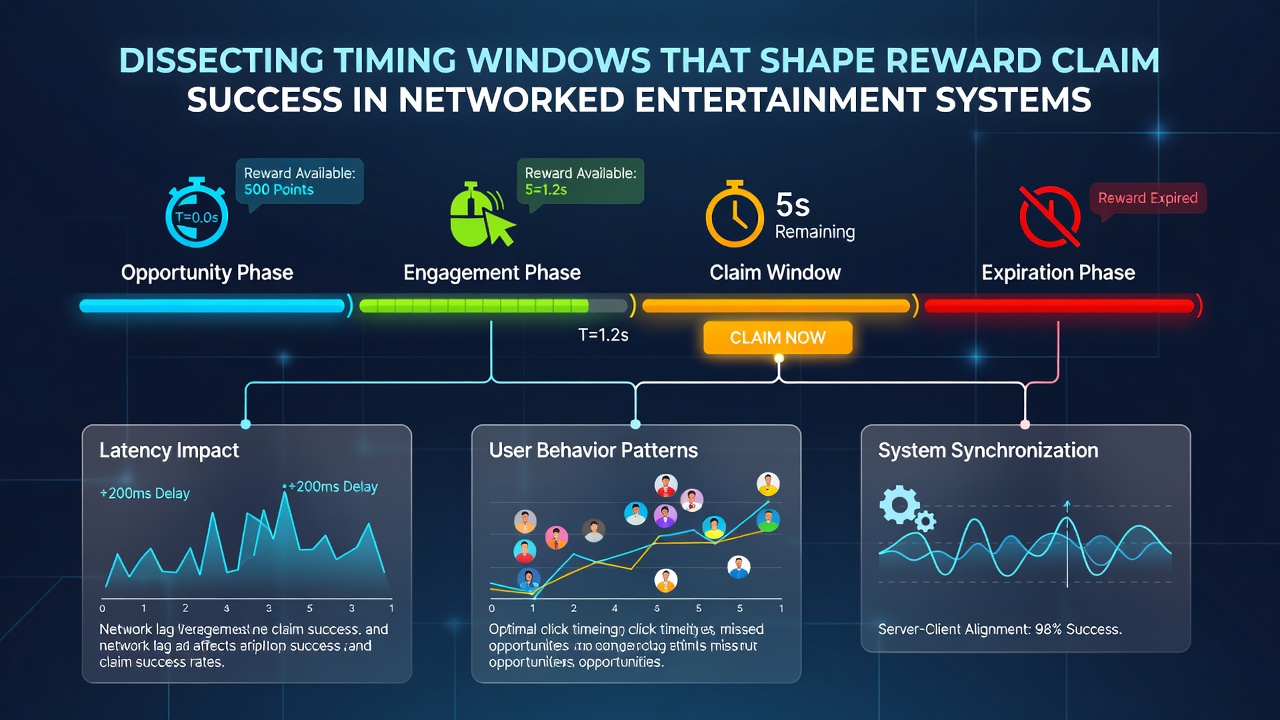
Networked entertainment platforms rely on coordinated clock systems that align client devices with central servers, creating brief periods where reward claims register as valid, while any deviation in latency or packet delivery can push a claim outside the active window and result in failure. Researchers have documented how these windows often span milliseconds to several seconds depending on the architecture, and data from industry reports indicate that platforms using blockchain verification extend window durations slightly to accommodate distributed ledger confirmations.
Device type plays a measurable role because mobile connections introduce variable jitter compared with wired desktop setups, and observers note that users on 5G networks sometimes experience narrower effective windows during peak congestion hours when handoff delays accumulate. Studies from academic institutions have measured average claim success rates dropping by up to 18 percent when round-trip times exceed 120 milliseconds, highlighting the direct relationship between network conditions and reward outcomes.
Regional Data Patterns Emerging in 2026
Figures released in July 2026 from regulatory bodies across multiple jurisdictions show consistent seasonal spikes in reward claim volume during holiday periods, with North American platforms reporting elevated activity between July 4 and July 15. The New Jersey Division of Gaming Enforcement published aggregated metrics indicating that timing-related claim failures accounted for 7.2 percent of all denied transactions during that window, a figure that aligns with similar observations from Canadian provincial regulators monitoring digital entertainment services.
Platforms incorporating real-time analytics adjust window lengths dynamically based on historical traffic, and one study revealed that systems applying machine learning predictions reduced failed claims by 11 percent compared with static configurations. Those who have analyzed transaction logs across European servers found that afternoon UTC hours consistently produced the highest success percentages, while late-night sessions showed greater variance due to maintenance cycles.
Technical Factors Influencing Window Effectiveness
Packet loss and buffer overflows represent primary disruptors that shrink usable timing windows, and platform operators implement quality-of-service prioritization to protect reward-related packets from being dropped during high-load events. Evidence from network monitoring tools shows that even brief bursts of congestion can shift a claim attempt outside the acceptance threshold, prompting developers to add client-side retry logic that respects server-side cooldown periods.
Encryption overhead and multi-factor authentication checks add processing time that must fit inside each window, and experts at research organizations have recommended streamlined token validation sequences to minimize these delays. Data indicates that platforms adopting edge computing nodes closer to user clusters achieve more stable window performance, particularly in regions with variable infrastructure quality.
Observed User Behaviors and System Responses
Users frequently attempt claims immediately upon notification, yet platform logs demonstrate that clustered submissions during the first 500 milliseconds of a window generate higher failure rates due to contention at verification endpoints. Those who have examined behavioral datasets note that spaced attempts, spaced 2 to 3 seconds apart, correlate with improved success when initial attempts encounter transient network hiccups.
System designers respond by publishing estimated window durations through in-app indicators, allowing participants to time their actions more precisely, and industry associations have encouraged standardized reporting of these metrics so users can anticipate optimal moments. July 2026 updates to several major platforms introduced visual countdown overlays that reflect real-time server load, a change that coincided with measurable reductions in timing-related denials according to aggregated operator data.
Conclusion
Timing windows remain a foundational element that determines reward claim outcomes across networked entertainment environments, and continued refinement of synchronization methods, latency mitigation, and user-facing indicators continues to shape platform performance. Regulatory disclosures and technical studies released through mid-2026 underscore the measurable impact of connection variables and verification architecture on overall success rates, while geographic patterns reveal both seasonal fluctuations and infrastructure-dependent differences that operators monitor closely. As systems evolve, the interplay between these technical constraints and user strategies will determine how effectively participants navigate the precise intervals available for reward acquisition.