Demographic Influences on Redemption Patterns for Promotional Incentives in Electronic Casino Platforms
Sam Günther · Jul 31, 2026
Demographic Influences on Redemption Patterns for Promotional Incentives in Electronic Casino Platforms
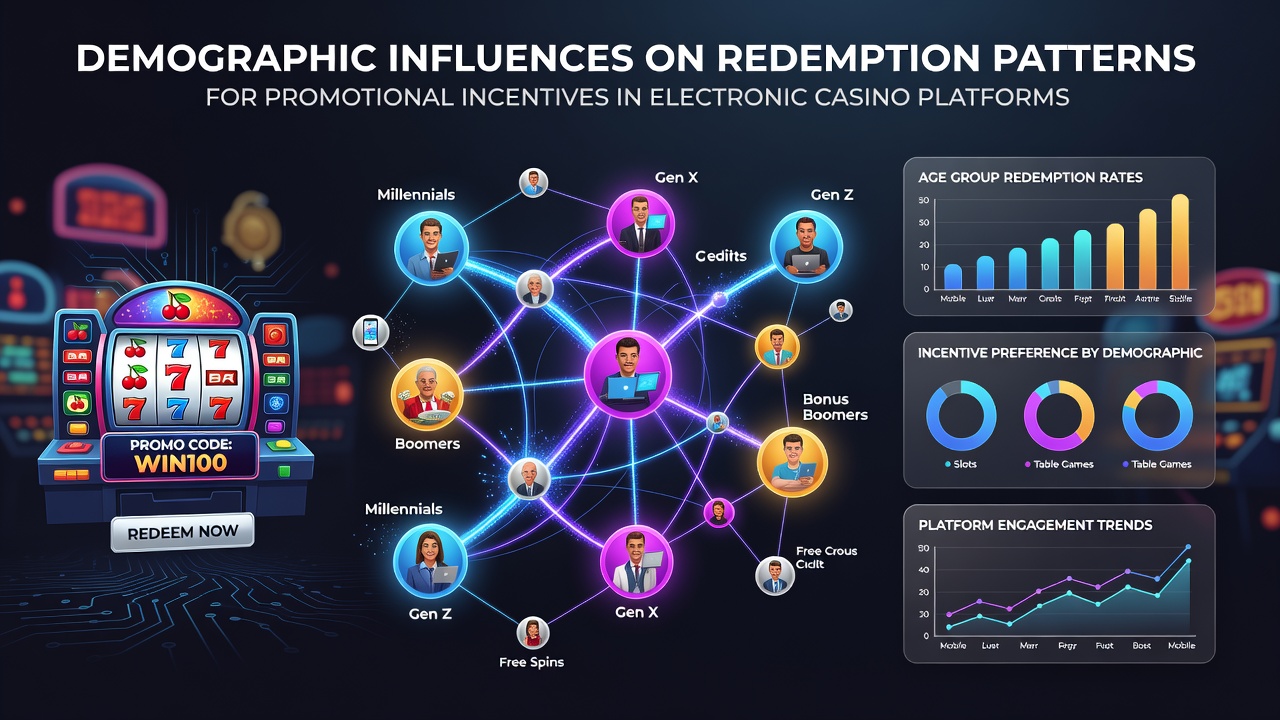
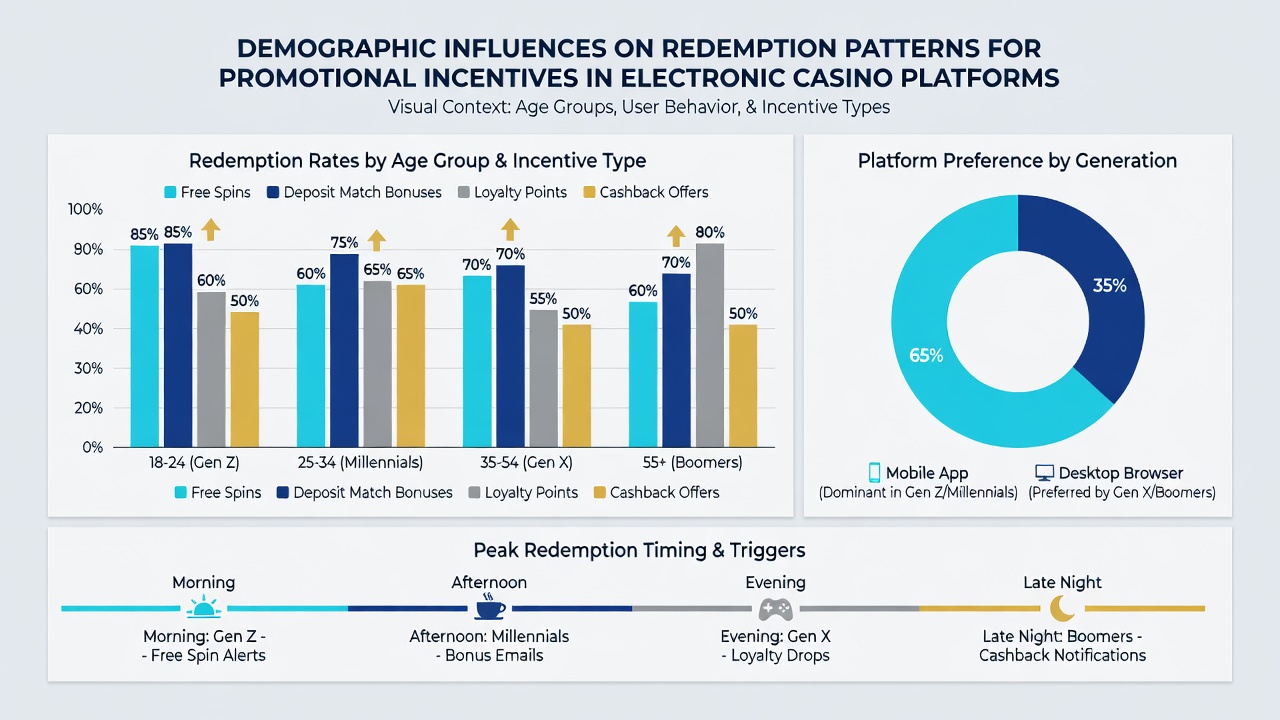
Electronic casino platforms track redemption patterns for promotional incentives through detailed user data, and demographic factors shape those behaviors in measurable ways. Age stands out as one of the strongest predictors, with users between 18 and 34 often claiming free spins and deposit matches within the first 60 minutes of receipt while those over 50 frequently delay redemptions by several days or more. Studies from industry analysts show that younger cohorts complete bonus wagering requirements faster on average, yet older players tend to select cashback offers at higher rates once they do redeem.
Age and Gender Trends in Bonus Claims
Platform logs collected through 2025 and into July 2026 reveal consistent splits along both age and gender lines. Men in the 25 to 44 bracket redeem no-deposit bonuses at roughly 1.8 times the rate of women in the same group, according to aggregated operator reports. Women across most age bands, meanwhile, show stronger preference for loyalty point multipliers tied to table game play rather than slot-focused promotions. Those patterns hold steady even when total account activity levels are controlled for, suggesting the differences stem from preference rather than simple volume of play.
Researchers have noted that mobile-first users skew younger and complete redemption steps on the same device more often than desktop users, who tend to be older and spread activity across multiple sessions. July 2026 data sets from several large operators indicated that tablet users, a smaller but growing segment, mirror desktop patterns more closely than smartphone patterns despite the portable hardware.
Geographic and Income Variations
Location influences both the types of incentives redeemed and the speed of those redemptions. Players in North American markets redeem time-limited deposit bonuses at higher percentages than users in European or Asian markets, where ongoing loyalty structures see greater uptake. American Gaming Association figures from early 2026 highlight that state-regulated platforms in the US record redemption windows averaging 14 hours shorter than those observed on offshore sites serving international audiences. Income brackets add another layer, with higher-earning users more likely to convert high-value match bonuses while lower-income cohorts favor smaller, frequent free spin packages that require minimal additional deposits.
Canadian provincial data collected through mid-2026 shows similar income-driven splits, with users reporting household earnings above CAD 90,000 selecting VIP-tier reload offers at nearly double the rate of those below CAD 50,000. These trends appear across both crypto and fiat platforms, though crypto users overall skew toward faster redemptions regardless of income level.
Device Type and Session Behavior Connections
Device choice correlates with demographic segments and directly affects how quickly promotional incentives move from claim to active use. Smartphone users, who skew younger and more urban, finish verification steps for instant bonuses in under 90 seconds on average. Desktop users, often older and located in suburban or rural areas, take nearly three times as long to complete the same process. Tablet sessions fall in between and frequently involve longer overall play periods once the bonus activates. Observers note that these device patterns remain stable even when the same demographic group accesses platforms through different hardware on different days.
Emerging Patterns in July 2026 Data
July 2026 platform metrics continue to confirm that education level and employment status also factor into redemption timing. Full-time employed users redeem weekday evening bonuses more rapidly than weekend offers, while students and part-time workers show the opposite preference. These habits persist across multiple operators and regions, pointing to lifestyle constraints rather than isolated platform quirks. Cross-tabulated data sets further indicate that users who maintain accounts on both regulated and offshore sites apply different redemption strategies depending on the platform type, with regulated sites seeing slower but more complete wagering fulfillment rates.
Conclusion
Demographic variables continue to shape redemption behavior across electronic casino platforms in consistent, documentable ways. Age, gender, geography, income, device preference, and employment status each contribute measurable differences in both the speed and the selection of promotional incentives. July 2026 figures align with earlier trends rather than signaling major shifts, suggesting operators will keep refining targeting based on these established demographic signals. Continued collection of anonymized user data will allow further refinement of those patterns without requiring changes to core platform mechanics.